Tileable insulation screed
Tiling-ready insulation screed floor build-up 4, 5 & 6 - Choose a different floor structure
+4.5 cm - upper floor, ground floor, basement, ... - with wooden joisting as a subfloor - tiles
The tileable insulation screed can be tiled directly after 3 to 4 days of drying time, provided a primer and a layer of levelling compound or tile adhesive are applied, whereas a screed requires 28 days.
Information
This lightweight floor structure is ideal for spaces with limited floor build-up height. The Staenis grid makes it possible in this situation to insulate your floor structure, level it, and tile it quickly.
The tileable insulation screed can, with primer and a thin levelling compound or tile adhesive layer, be directly covered with tiles after 3 to 4 days of drying time, whereas for a screed this is 28 days.
A floor structure with tileable insulation screed is 7 times lighter than a traditional screed and very pleasant to install. The tiles will also feel warmer due to the insulating effect of the screed.
Choose Cem Mini for laminate flooring. Smooth the primed substrate with Keraflex, then lay the underlay and laminate. Observe the flatness and residual moisture requirements for the chosen floor finish.
Advantages
- Achieve a perfect end result without experience
- Directly tileable after 3 days, provided that a cement slurry layer is applied.
- Lightweight (7 times lighter than a sand-cement screed) and sound-insulating floor
- No expansion joints needed
- Possibility to insulate your (very) low floor build-up over the entire thickness.
- Spreading screed work over several days (no stress during placement)
Floor construction manual
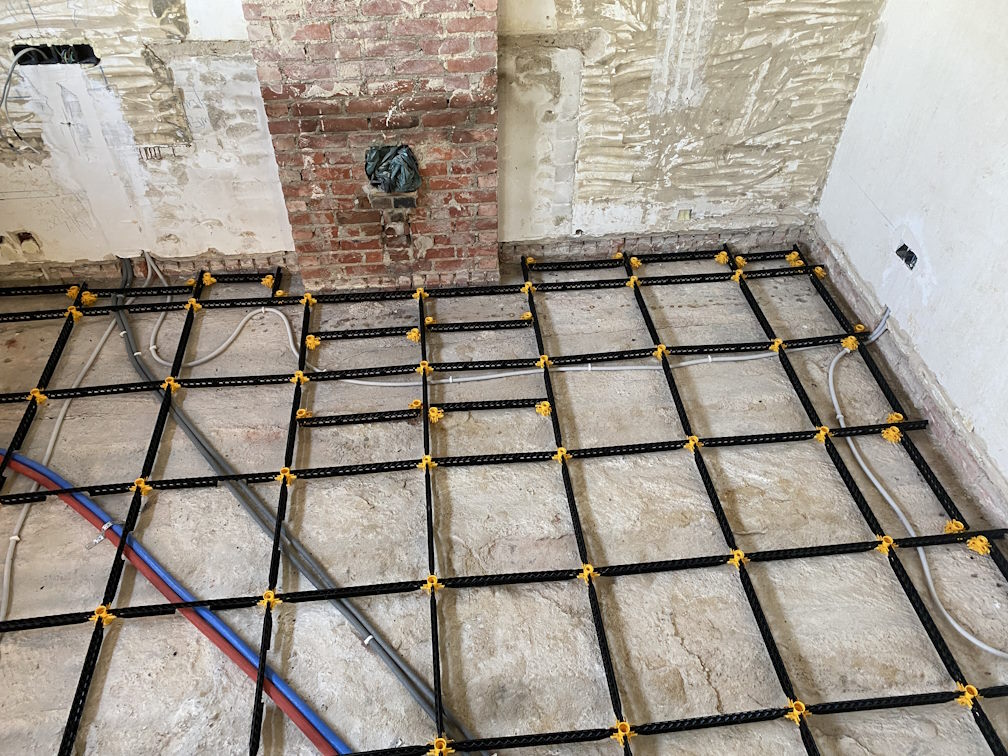
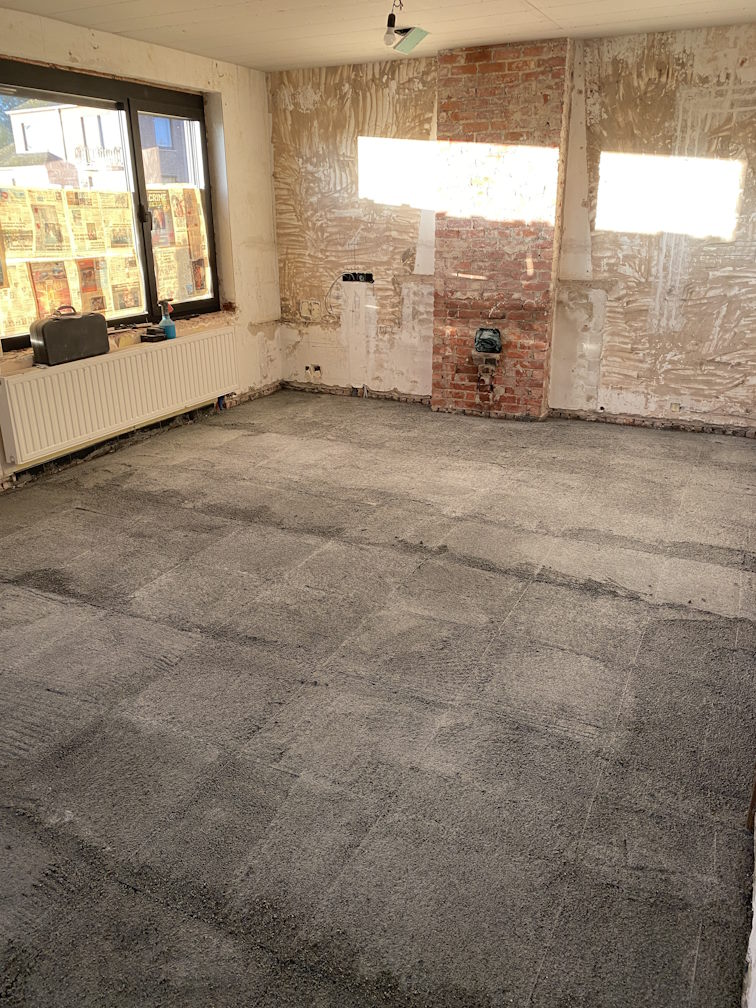
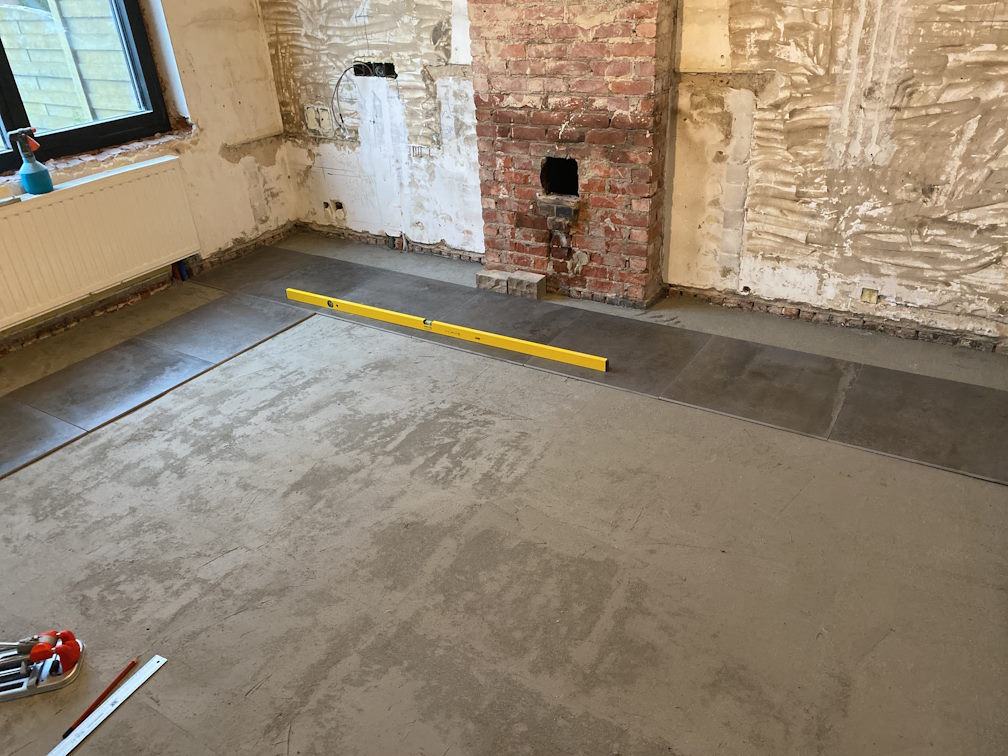
For Strong tileable insulation screed on a hard, stable substrate, preferably omit the membrane so the screed can bond. If a membrane is needed, for example against rising damp, lay a suitable steel screed mesh or flexible reinforcement mesh on it. Place the Staenis grid on top and fill it with Strong. The mesh helps reduce the risk of curling during drying; the screed does not bond to the substrate through the membrane. Avoid damaging the membrane and do not use a soft foam or acoustic layer beneath Strong.
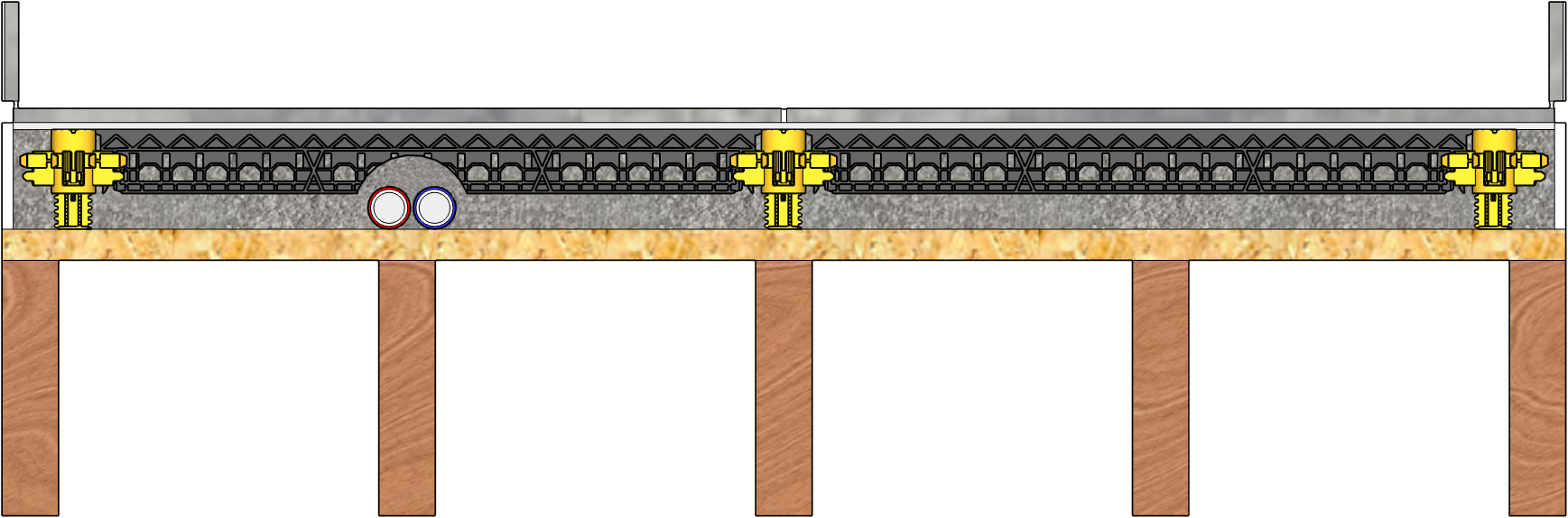
Side view of floor structure
View this floor structure in real life via Sack Zelfbouw
Legend
- Timber framework
- Wooden board
- Pipes (heating, electricity, drainage, etc.)
- Staenis grid (thickness from 4.5 to 9 cm)
- Edge insulation 8 mm thick
- Tileable insulation screed with levelling layer
- Double bonding with S1 Flex Tile Adhesive
- Tiles (min. 8 mm thick and min. size 30x30 cm)
- Water-repellent, colored joint mortar
- Skirting board
- Flexible silicone
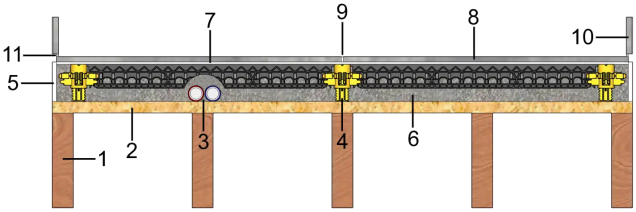
Side view of floor structure with extension legs
Legend
- Timber framework
- Wooden board
- Pipes (heating, electricity, drainage, etc.)
- Staenis extension leg (+ 4 cm extra height)
- Staenis grid (thickness from 4.5 to 9 cm)
- Edge insulation 8 mm thick
- Tileable insulation screed with levelling layer
- Double bonding with S1 Flex Tile Adhesive
- Tiles (min. 8 mm thick and min. size 30x30 cm)
- Water-repellent, colored joint mortar
- Skirting board
- Flexible silicone
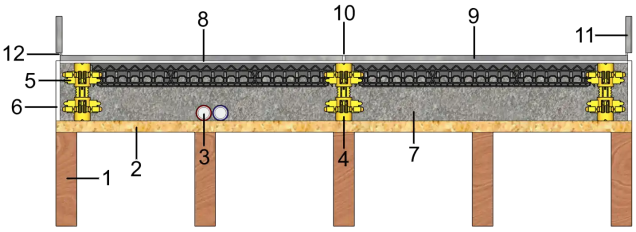
Side view of floor build-up with wooden blocks
Legend
- Timber framework
- Wooden board
- Pipes (heating, electricity, drainage, etc.)
- Wooden blocks 9 x 9 cm
- Staenis grid (thickness from 4.5 to 9 cm)
- Edge insulation 8 mm thick
- Tileable insulation screed with levelling layer
- Double bonding with S1 Flex Tile Adhesive
- Tiles (min. 8 mm thick and min. size 30x30 cm)
- Water-repellent, colored joint mortar
- Skirting board
- Flexible silicone
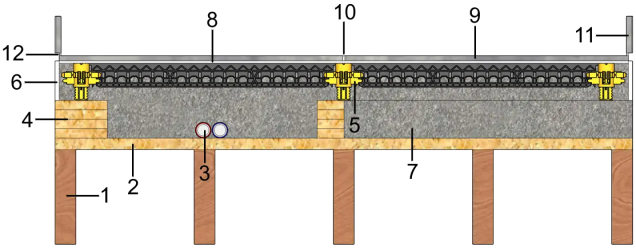
Side view of floor build-up with levelling layer
Legend
- Timber framework
- Wooden board
- Pipes (heating, electricity, drainage, etc.)
- Tileable insulation screed
- Edge insulation 8 mm thick
- Staenis grid (thickness from 4.5 to 9 cm)
- Tileable insulation screed with levelling layer
- Double bonding with S1 Flex Tile Adhesive
- Tiles (min. 8 mm thick and min. size 30x30 cm)
- Water-repellent, colored joint mortar
- Skirting board
- Flexible silicone
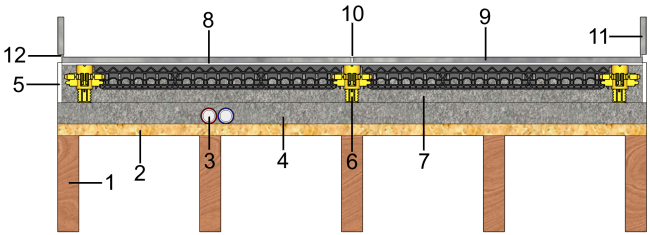
Electric underfloor heating under tiles
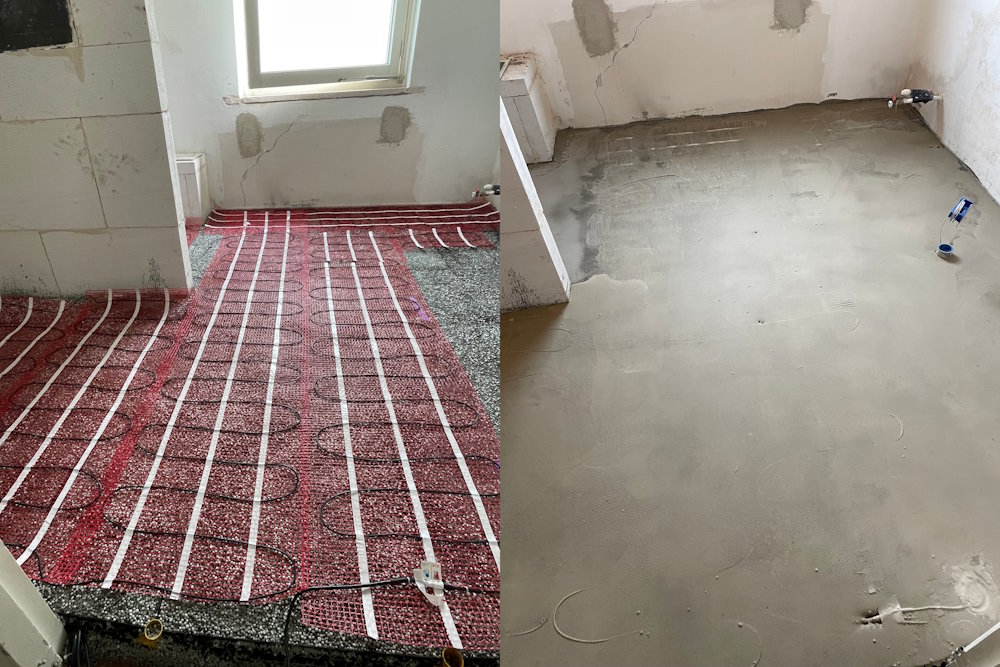
Electric underfloor heating can be installed on top of tileable insulation screed after the layer is fully dry and primed. The insulating layer limits downward heat loss, so the heat is mainly emitted upward through the tiles.
Always follow the instructions from the manufacturer of the electric underfloor heating, primer, tile adhesive, and tile finish.
Tileable insulation screed compatible with WARP underfloor heating system Speetile 10
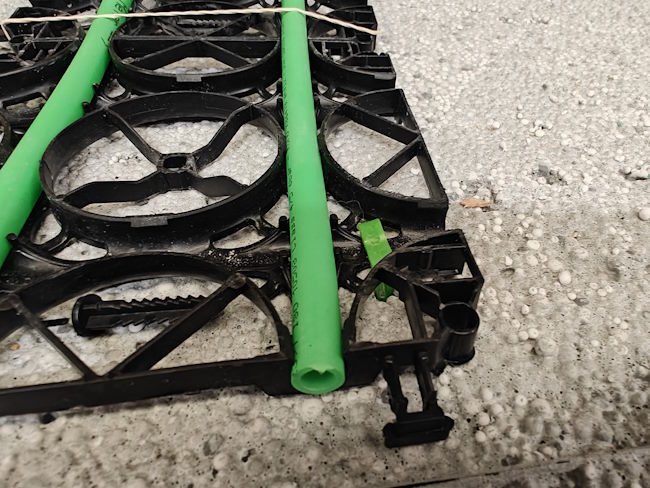
SpeeTile is suitable for underfloor heating and cooling. This 'wet construction' system is the thinnest water-based system for underfloor heating and cooling. The SpeeTile system is also suitable as primary heating.
1. Apply our primer for absorbent substrates to the tileable insulation screed.
2. Install the Warp Speetile 10 system. Attach the plastic system to the tileable insulation screed with the supplied black U plugs.
3. Pour the fast-drying SpeeTop filler over the plastic system and check with a laser and meter that everything is at the correct height.
More information available via WarpInstallation video

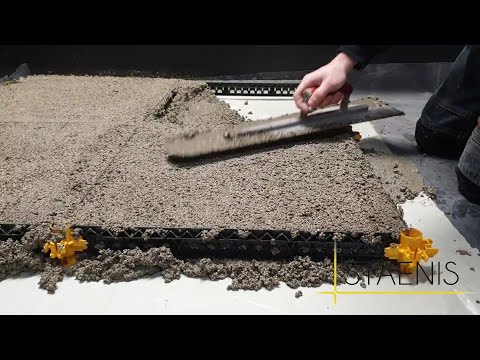
We deliver tileable insulation screed in bags to your home
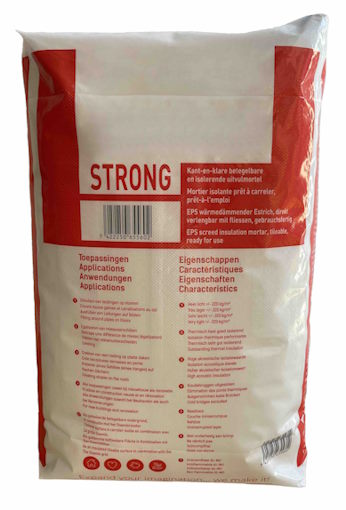
The insulation screed is pre-mixed with new EPS beads, combined with cement, water, and specific patented additives.
The EPS beads have a specially small diameter of 2mm-6mm, in order to achieve an even flatter result with the Staenis grid.
Tileable insulation screed can only be installed in combination with the Staenis grid. The Staenis grid is moisture-resistant, absorbs all shrinkage, and ensures perfectly level installation and reinforcement.

A level finish with Keraflex
Finish your tileable Strong insulation screed or Cem Mini with Mapei Keraflex Extra S1 LD ZERO. The mortar can be levelled along the Staenis grid and fills the open structure of the substrate.
Finish Strong with tiles. For laminate over Cem Mini, lay the underlay and laminate after levelling the surface. Prepare the substrate with FG300 primer and follow the application instructions for each product.
View Keraflex levelling mortar/tile adhesivePrimer
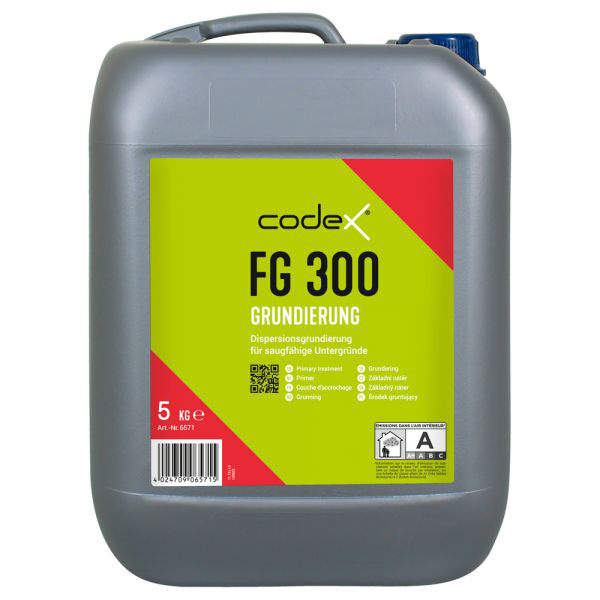
Fast-drying dispersion primer for the pretreatment of tileable insulation screed/insulation mortar, screed, or concrete. Reinforces the top layer and ensures that the tile adhesive/levelling compound adheres better and dries less quickly on the absorbent substrate.
Purchase primerWe deliver strong lightweight screed to your home
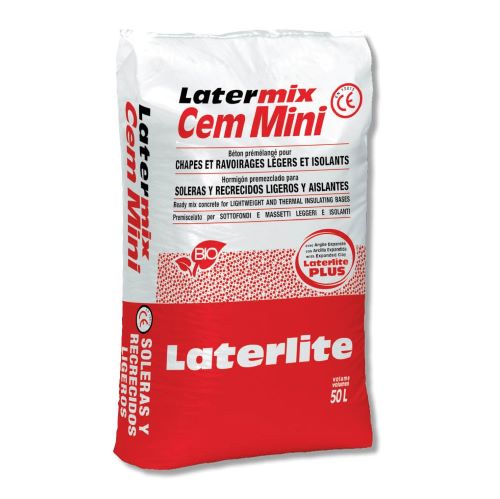
Cem Mini is a lightweight insulating concrete with a higher compressive strength than our Strong version. For laminate or another floating floor, the need for a suitable levelling layer, underlay and moisture protection depends on flatness and measured residual moisture. Follow the flooring and underlay manufacturers’ instructions and the Cem Mini technical data sheet. Ceramic tiles can be bonded directly in accordance with the manufacturer’s instructions. Cem Mini is also suitable for flat roofs with appropriate waterproofing. It is heavier than Strong; check the floor load.
Enter the screed thickness. Measure from the base on which the screed starts to the top of the screed.
Do not include flooring, adhesive or other layers above.
Enter the combined thickness of the insulating screed and screed. Measure from the base beneath the insulating screed to the top of the screed.
Do not include flooring, adhesive or other layers above.
Enter the thickness of the stabilised sand bed. Measure from the base beneath the sand bed to the top of the sand bed.
Do not include flooring, adhesive or other layers above.
Enter the drainage mortar thickness. Measure from the base beneath the drainage mortar to the top of the drainage mortar.
The screed used to smooth the surface is calculated separately. Do not add extra thickness for it; also exclude adhesive and tiles.
Do not include OSB in this thickness.
Enter the insulating screed thickness. Measure from the base on which the insulating screed starts to the top of the insulating screed.
Do not include OSB or other floor boards on top of the insulating screed. Any screed, adhesive and flooring above are also excluded from this measurement.
Enter the insulating screed thickness. Measure from the base on which the insulating screed starts to the top of the insulating screed.
Do not include the separately calculated levelling compound, adhesive or flooring above.
Do not include OSB in this thickness.
Enter the height of the dry fill in the grid. Measure from the base beneath the grid to the top of the filled grid.
Do not include OSB or other floor boards on top of the system. Underfloor heating, adhesive and flooring above are also excluded from this measurement.
Enter the thickness of the levelling compound layer. Measure from the surface to be levelled to the top of the levelling compound.
Do not include flooring, adhesive or other layers above.
Do not include OSB in this thickness.
Enter the adjusted system height. Measure from the surface supporting the feet or adjustment screws to the top of the supporting structure.
Do not include OSB or other floor boards on top of the system. Underfloor heating, adhesive and flooring above are also excluded from this measurement.
Do not include OSB in this thickness.
Enter the height of the CircoFloor system with fill. Measure from the base on which the adjusting screws stand to the top of the CircoFloor structure.
Do not include OSB or other floor boards on top of the system. Underfloor heating, adhesive and flooring above are also excluded from this measurement.
Measure from the base to the underside of the tile. The entered height includes CircoFloor and both pads: 3 mm below + 3 mm above. Do not include the tile itself.
Enter both the smallest and the largest distance to the underside of the tiles.
First select a filling material in the calculator to see its thickness explanation.