Terrace tiles on CircoFloor
Enter the screed thickness. Measure from the base on which the screed starts to the top of the screed.
Do not include flooring, adhesive or other layers above.
Enter the combined thickness of the insulating screed and screed. Measure from the base beneath the insulating screed to the top of the screed.
Do not include flooring, adhesive or other layers above.
Enter the thickness of the stabilised sand bed. Measure from the base beneath the sand bed to the top of the sand bed.
Do not include flooring, adhesive or other layers above.
Enter the drainage mortar thickness. Measure from the base beneath the drainage mortar to the top of the drainage mortar.
The screed used to smooth the surface is calculated separately. Do not add extra thickness for it; also exclude adhesive and tiles.
Do not include OSB in this thickness.
Enter the insulating screed thickness. Measure from the base on which the insulating screed starts to the top of the insulating screed.
Do not include OSB or other floor boards on top of the insulating screed. Any screed, adhesive and flooring above are also excluded from this measurement.
Enter the insulating screed thickness. Measure from the base on which the insulating screed starts to the top of the insulating screed.
Do not include the separately calculated levelling compound, adhesive or flooring above.
Do not include OSB in this thickness.
Enter the height of the dry fill in the grid. Measure from the base beneath the grid to the top of the filled grid.
Do not include OSB or other floor boards on top of the system. Underfloor heating, adhesive and flooring above are also excluded from this measurement.
Enter the thickness of the levelling compound layer. Measure from the surface to be levelled to the top of the levelling compound.
Do not include flooring, adhesive or other layers above.
Do not include OSB in this thickness.
Enter the adjusted system height. Measure from the surface supporting the feet or adjustment screws to the top of the supporting structure.
Do not include OSB or other floor boards on top of the system. Underfloor heating, adhesive and flooring above are also excluded from this measurement.
Do not include OSB in this thickness.
Enter the height of the CircoFloor system with fill. Measure from the base on which the adjusting screws stand to the top of the CircoFloor structure.
Do not include OSB or other floor boards on top of the system. Underfloor heating, adhesive and flooring above are also excluded from this measurement.
Measure from the base to the underside of the tile. The entered height includes CircoFloor and both pads: 3 mm below + 3 mm above. Do not include the tile itself.
Enter both the smallest and the largest distance to the underside of the tiles.
First select a filling material in the calculator to see its thickness explanation.
How much screed, insulating screed or levelling compound do you need?
This quantity calculator estimates the volume and material quantities for your floor build-up. Calculate screed, insulating screed, levelling compound, cement-stabilised sand or drainage mortar, or check how much dry filling material you need, such as EPS, cork and aerated concrete granules.
Still unsure which filling material to choose? Browse our floor build-up overview to find a build-up that suits your project.
From area and thickness to volume
- Enter the area in m² and the thickness in mm. The calculated volume appears next to the input fields.
- Choose your filling material. The results show the quantities needed for each component or layer.
- Are alternatives shown? Choose one option; do not add the quantities together.
Volume is the area multiplied by the thickness in metres. A floor of 27 m² with an 80 mm layer represents 2.16 m³. The number of bags, kilograms or tonnes needed then depends on the selected material and pack size.
Which material quantities does the calculator show?
Depending on your selection, you will see the filling material quantities and the required system components: the Staenis grid or levelling grid, with the corresponding battens, feet and any extension feet. For certain floor build-ups, primer and Keraflex for the finish are also calculated.
For screed and cement-stabilised sand, self-mixing, ready-mixed bags and bulk delivery are shown separately. This lets you compare quantities for each alternative without adding different supply options together.
Want to check the grid layout in your room? Draw your floor in the online layout planner to create a laying plan and check the system components.
From calculation to price and order
You can request your price including delivery by email or go to the webshop via the ordering options.
The quantities are estimates. Measure the thickness in several places and allow a margin for unevenness and waste.
Still have a question about your floor build-up?
Type your question here. We will then automatically open the contact page so you can start step 1 in the right place straight away.
Type your question below. We will then send you to the contact page.
Create a strong, level base for your floor yourself with the Staenis grid
and achieve a professional floor build-up without prior experience.
The Staenis grid is a DIY system for small surfaces and allows you to easily create your living space, bathroom, attic, garden house, and terrace floor build-up yourself.
Can be covered with many types of floor coverings
Insulating - lightweight - draining - fast-drying - circular
We deliver regular and tileable insulation screed in bags to your home

The insulation screed is pre-mixed with new EPS beads, combined with cement, water, and specific patented additives.
The EPS beads have a specially small diameter of 2mm-6mm, in order to achieve an even flatter result with the Staenis grid.
The insulation screed in bags is easy to transport and makes it possible for you to insulate your floor yourself.
Non-walkable insulation screed can be used as insulating infill in the Staenis grid, single or double boarded with at least 18mm OSB. It can also be used as an insulating levelling layer, with a screed on top.
Tileable insulation screed can only be installed in combination with the Staenis grid. The Staenis grid is moisture-resistant, absorbs all shrinkage, and ensures perfectly level installation and reinforcement.
Primer
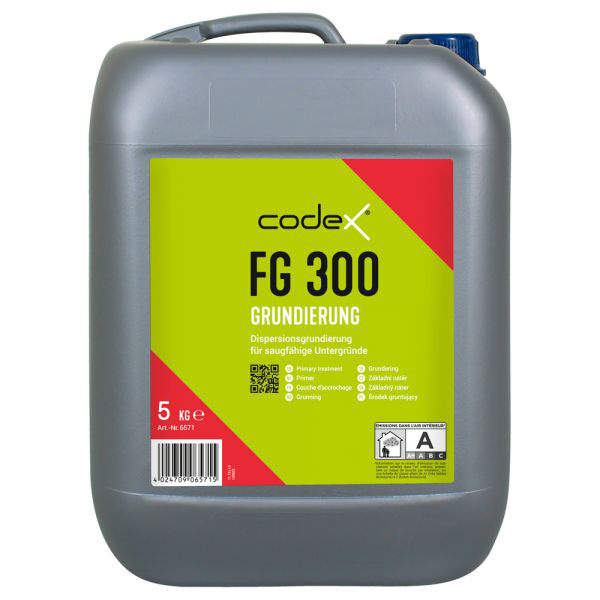
Fast-drying dispersion primer for the pretreatment of tileable insulation screed/insulation mortar, screed, or concrete. Reinforces the top layer and ensures that the tile adhesive/levelling compound adheres better and dries less quickly on the absorbent substrate.
Purchase primerWe deliver screed and drainage mortar in a silo to your home
We deliver silos only within our delivery area in Belgium, after checking the construction site address and availability.
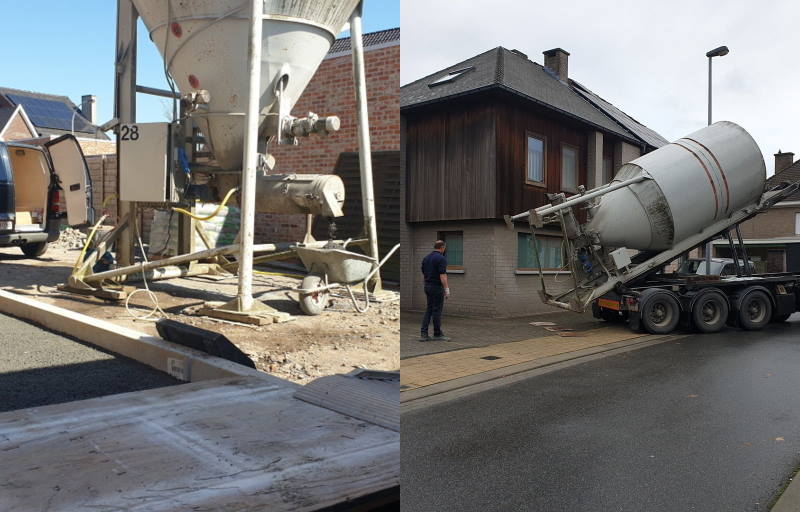
With a simple press of the button on the silo, you produce fresh drainage mortar or sand-cement screed at a rate of 3 m³/h, and this without time pressure to process the large quantity of mortar.
There are actually 2 separate compartments in the silo. One part is filled with porphyry (2-6mm) or sand (0/4-0/7mm), and the other part is filled with dry cement (250kg/m³). These are only mixed with water at the moment you wish.
The big advantage of this is that you can create fresh drainage mortar or sand-cement screed at your own pace and for several weeks.
We deliver aerated concrete levelling granules in bags to your home
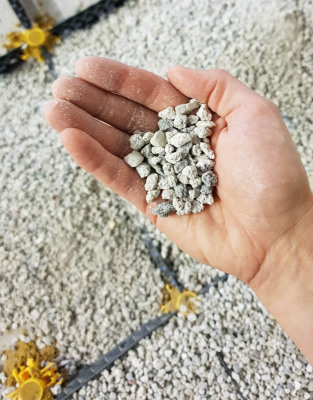
Aerated concrete levelling granules are a cheaper alternative to the standard levelling granules from, for example, Fermacell.
Cellular concrete levelling granules can only be installed in combination with the Staenis grid, with an OSB board or Fermacell floor panel on top.
The cellular concrete levelling granules in bags are easy to transport and make it possible to level your floor dry by yourself.
The cellular concrete levelling granules are load-bearing, so you do not need to place 8 extra supports per square meter.
We deliver cork insulation granules in bags to your home
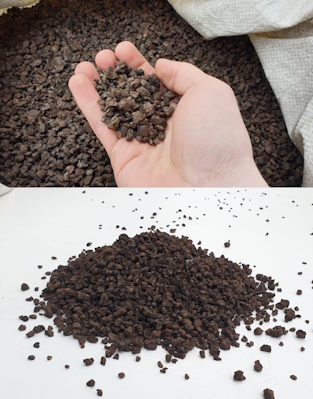
Moisture-resistant recycled cork granules for thermal and acoustic insulation of floors and joist structures.
The cork insulation granules in bags are easy to transport and make it possible to dry-level your floor yourself.
Cork granules are not load-bearing. The fibre-reinforced green dry-floor grid does not require 8 additional feet per m². With the earlier black-and-yellow screed grid, add 8 feet per m² and reinforce them with lime or cement mortar. For both versions, bond the feet to the substrate with PU foam.
We deliver high-performance lightweight mortars in bags to your home

Latermix Cem Mini is an ultralight insulating concrete. For laminate or another floating floor, a suitable levelling layer, underlay and moisture protection depend on flatness and measured residual moisture. Follow the floor and underlay manufacturers’ instructions and the Cem Mini technical data sheet.
Cem Classic: drainage mortar, now conveniently packaged in bags. This can be used/applied in the same way as drainage mortar from a silo, but with the added advantage that it is three times lighter. This property makes processing significantly easier. Ideal for creating a water-permeable base for small or hard-to-reach terraces.
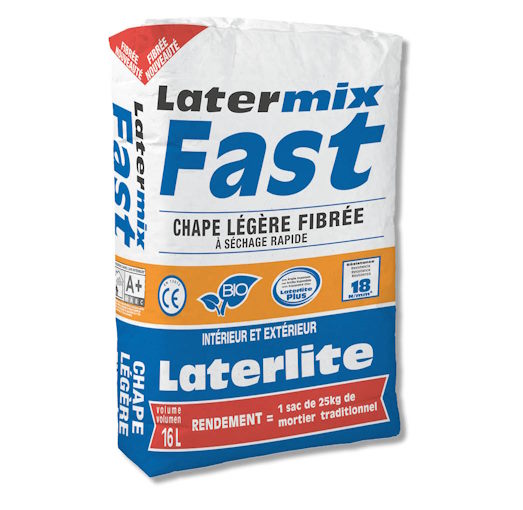
Fast: Fast-drying, fibre-reinforced screed with only 2/3 of the weight compared to traditional screed. This makes the work significantly less heavy when working with bagged material instead of traditional screed. Ideal for applying a bonded screed floor or for small spaces, both indoors and outdoors. This Fast screed is easy to spread, allowing you to achieve a flat finish more quickly. When bonded to concrete, Latermix Fast requires a minimum thickness of 2.5 cm, which may be reduced locally to 1 cm. Apply the screed wet-on-wet onto a fresh bonding slurry of cement, latex and water, following the technical data sheet (Latex CS). The 1 cm exception applies only to local areas, not to the entire floor. Tip for thin areas: mix with approximately 2 litres of water per bag to achieve an earth-moist consistency. If site conditions require it, the water quantity may be increased slightly to improve workability, as stated in the technical data sheet. Additional water may extend the drying time. Apply the screed onto the still-fresh bonding slurry and compact thoroughly.