Bagged screed and floor build-up materials: complete selection guide
By Staenis |
If you search for bagged screed, what you usually need is the right build-up: light or heavy, wet or dry, insulating or ready for direct finishing.
This guide compares nine bagged solutions for renovation and new-build floors. Want to narrow it down faster? Start with our floor build-up selector or use the material calculator to estimate quantities.
Contents
Why people search for 'screed' when they need something else
People who search for 'screed' do not always mean the same solution. Sometimes they need a classic screed, sometimes a light insulating fill layer, sometimes dry granules and sometimes a levelling product. That is why this guide brings the decision into one overview and links to our articles about the difference between screed, stabilized sand and concrete, making screed yourself, minimum thickness, screed pricing and ready-made screed.
Which solution fits your floor build-up?
Use this compact decision aid as your first filter. Then move straight to the product blocks to open the option that best matches your substrate, build-up height and final finish.
Do you want to work wet or dry?
If you prefer a dry method, for example on an upper floor or attic, recycled aerated concrete granules, cork granules or graphite recycled EPS beads are usually the better fit. Wet application is more logical for insulation screed, Latermix products and levelling compounds.
Do you want to move straight toward tiling?
For a light insulating layer that can move quickly toward tile finishing with the right preparation, tileable insulation screed strong is the most logical choice. Levelling compound then acts as a fine correction layer, not as the main fill.
Does the build-up need to stay light and insulating?
Then insulation screed soft, cork granules, graphite recycled EPS beads and in some cases Latermix Cem Mini are strong candidates. They reduce weight while improving thermal performance.
Do you need fast drying or very fine levelling?
Latermix Fast is made for speed on site. Codex levelling compound is the better choice when the substrate is already close and you only need a flat finishing layer for tiles or other sensitive floor finishes.
Product-by-product guide
The comparison below covers products for classic screeds, insulating build-ups, dry fillers and levelling. This makes it easier to see which bagged solution fits your project.
Insulation screed (soft)
Insulation screed soft is a light wet fill layer for renovations, upper floors and areas where you want better thermal performance without a heavy load. It is always meant as a fill layer, not as the final load-bearing top layer. See our page about insulation screed and lightweight floor build-up or use the calculator to estimate the required volume.
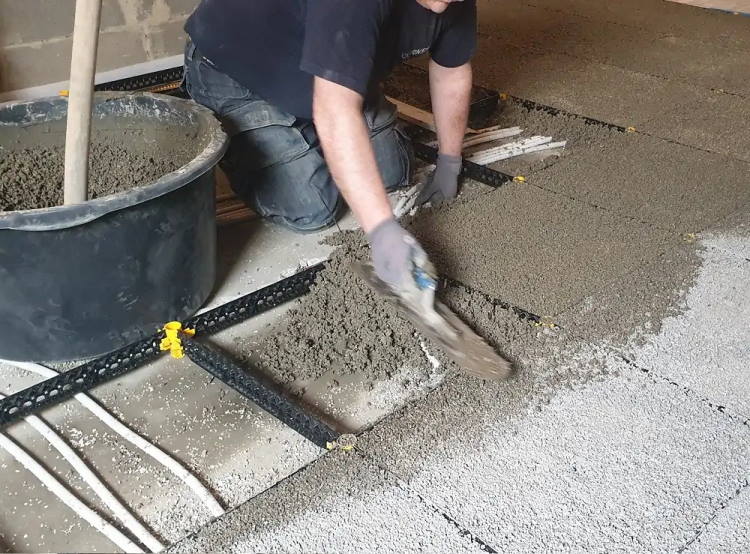
The mix of EPS beads and binder gives you an easy-to-handle bagged solution that is much lighter than a traditional sand-cement screed. Choose it when you need to fill height, cover pipes and add thermal performance at the same time. Soft is not a final load-bearing finish: on top of the filled grid you always add board material such as OSB or Fermacell or another suitable floor build-up.
Tileable insulation screed (strong)
Tileable insulation screed strong was developed for projects where you want a light insulating layer inside the Staenis grid and a quick route toward tile finishing. Our page about insulation screed and tileable systems shows how this build-up works; with the calculator you can quickly estimate the number of bags.
strong is interesting when insulation and weight saving are the main priorities in a tile-oriented floor build-up. It is meant for use inside the Staenis grid and, after sufficient drying plus primer and a thin levelling or tile-adhesive layer, allows a fast route towards tiles. Technically, it is around 0.5 N/mm² in compressive strength and about 0.048 W/mK, so it mainly stands out in insulation and low weight.
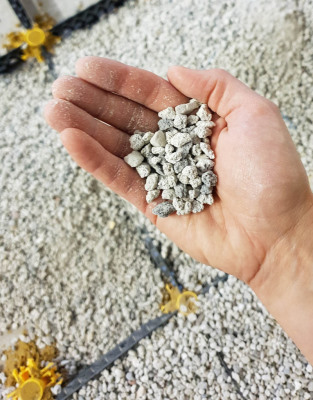
Recycled aerated concrete granules
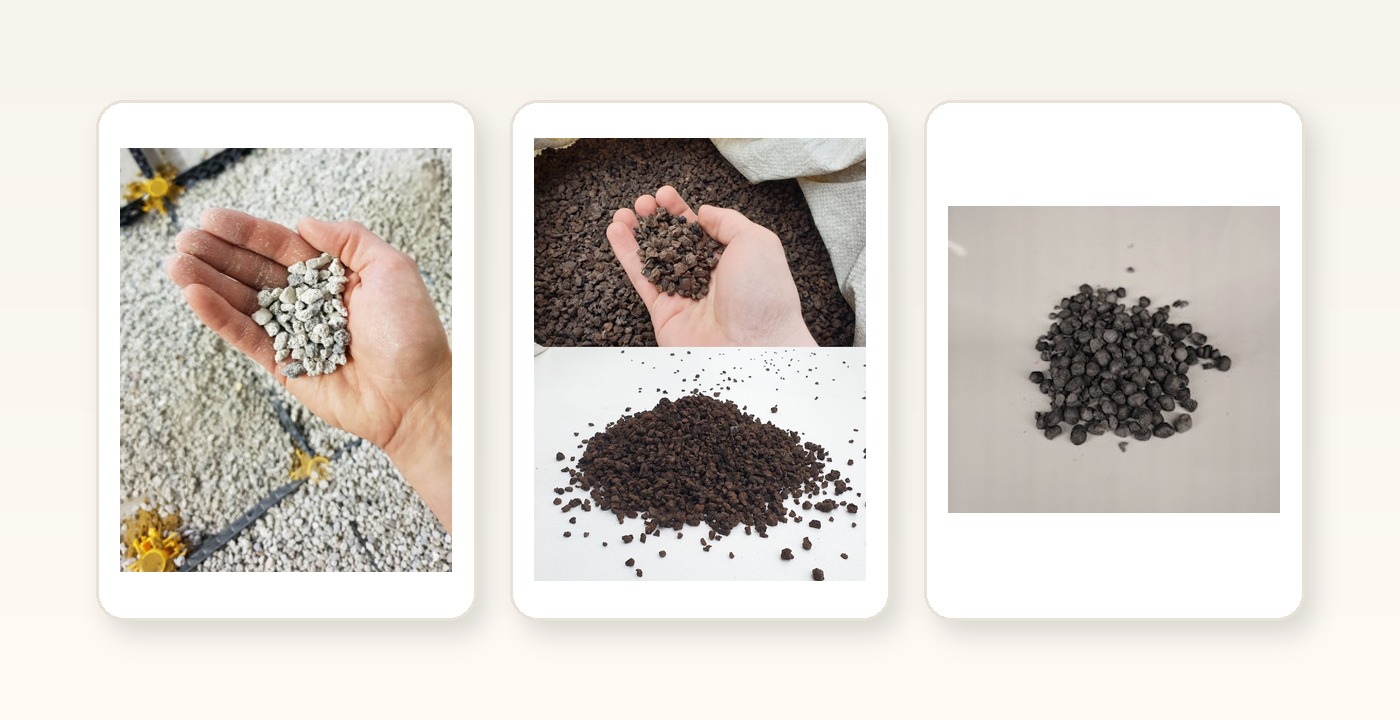
Recycled aerated concrete granules are designed for dry floor build-ups where you want to fill quickly and without drying time, but still want a sturdier dry system. On the page about dry fillers and dry floors you can see how they combine with boards; the calculator helps you estimate the quantity.
Recycled aerated concrete granules are meant for dry floor build-ups where you want to fill without a wet screed, but still need a firmer and more load-bearing result than EPS or cork. In a Staenis dry floor they provide more load-bearing capacity, a firmer walking feel and less bounce or hollow walking sound.
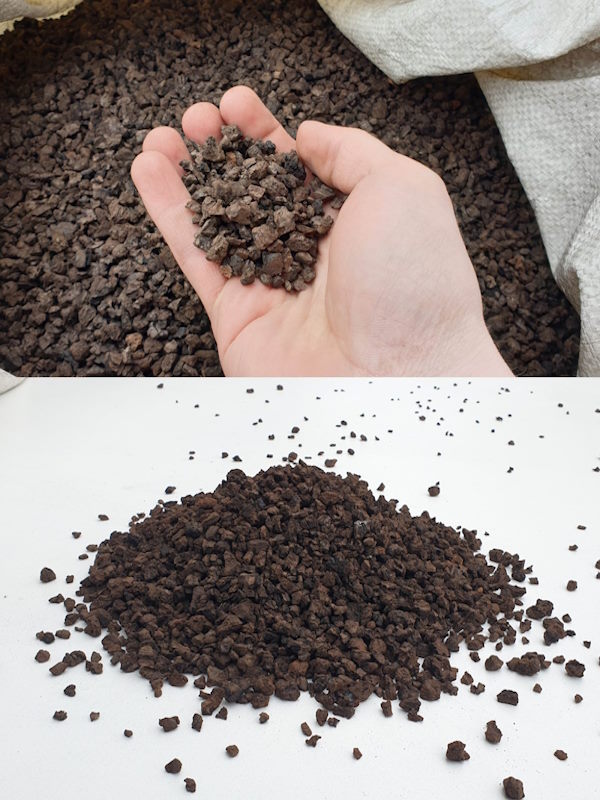
Cork granules
Cork granules are interesting when you want a dry method and also value thermal comfort and sound reduction. On our page about dry fillers you can see how they fit into a floor build-up; the calculator gives you a quick first estimate.
Cork granules are interesting when you want a dry method and also value thermal comfort and sound reduction. They are light, dimensionally stable and circular, but not load-bearing on their own. Because of the resilience of the material, it is best to combine them with the fibre-reinforced dry-floor grid or with extra support where needed.
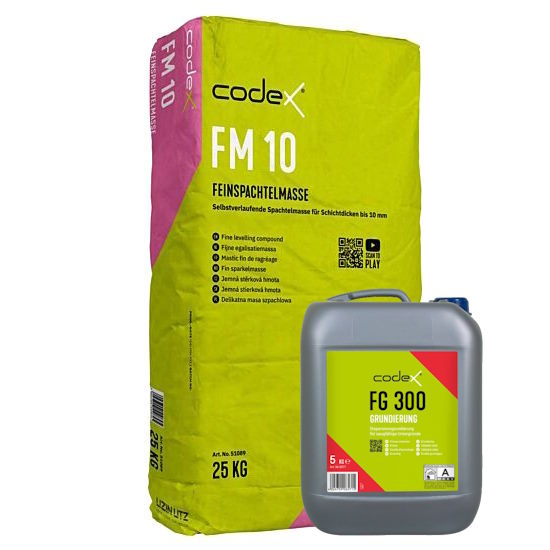
Codex levelling compound
Use Codex levelling compound when the substrate is already mostly right but still needs a fine correction layer. See our page about levelling and creating a flat finish and use the calculator to estimate material use.
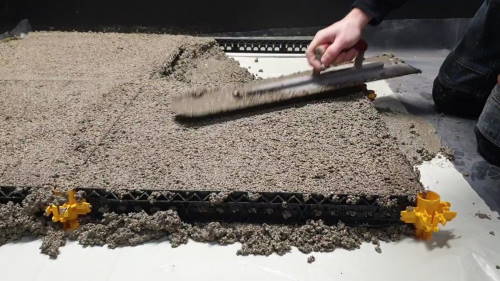
This product is not a replacement for a full fill layer. It really shines as the final levelling step on top of a stable substrate. For larger heights or embedding pipes, a thin bonded screed in the levelling grid is usually the more logical and often cheaper solution.
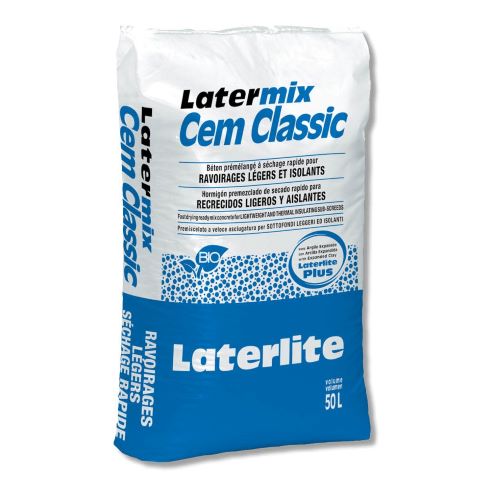
Latermix Cem Classic
Latermix Cem Classic is a lightweight drainage mortar for outdoor applications such as terraces and balconies. On the page about terraces and outdoor build-ups you can see typical systems; the calculator helps you estimate volume.
Latermix Cem Classic is mainly intended as a lightweight drainage mortar for outdoor build-ups where water drainage, lower weight and frost resistance matter. On closed substrates such as concrete slabs or balconies, this system helps water escape, making it a better fit for terraces and outdoor applications than for a generic indoor floor.
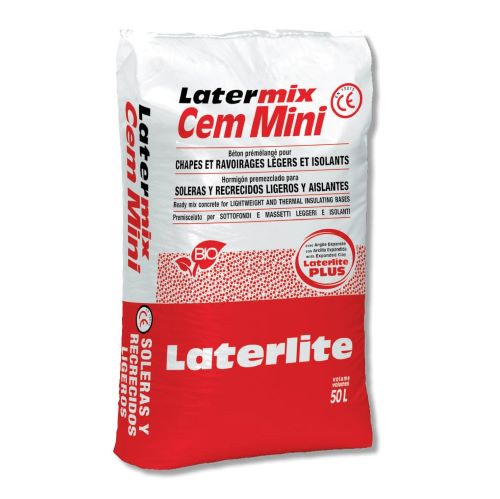
Latermix Cem Mini
Latermix Cem Mini is especially relevant when you work with limited height and still need a lightweight wet solution. Also see our page about lightweight floor build-ups and use the calculator for a first consumption estimate.
Latermix Cem Mini is an ultra-light insulating concrete/mortar for projects where higher compressive strength is needed without building heavily with a traditional screed. Its finer grain and higher strength of about 5 N/mm² make it useful in detail zones, lower build-up heights and situations where you want to tile directly onto a much stronger base. Its insulation value is lower than strong though, at about 0.142 W/mK.
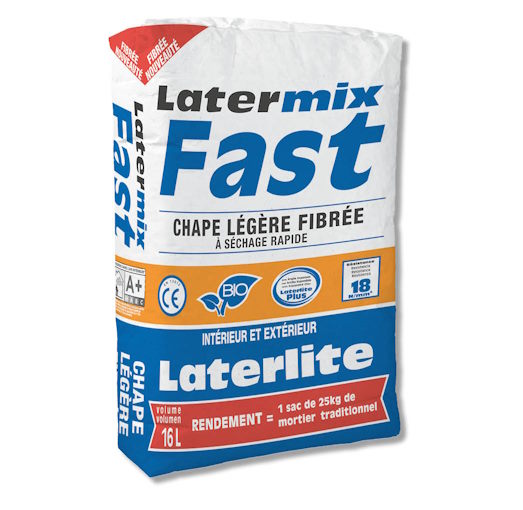
Latermix Fast
Latermix Fast is a fast-drying, fibre-reinforced screed for sites where speed matters and you want to move quickly to the next stage of the floor build-up. On the page about screeds and floor build-up you will find more context; the calculator gives you a quick first estimate.
Latermix Fast is aimed at floor build-ups where speed comes first. It is a fast-drying, fibre-reinforced screed that, according to the product information, can already be tiled after about 24 hours. That makes it especially useful when you want to keep the site schedule short without giving up strength.
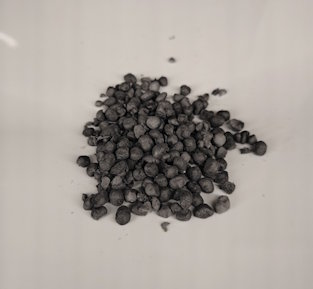
Graphite recycled EPS beads 145L
Graphite recycled EPS beads are intended for projects where you want to save as much weight as possible while improving thermal performance. On the page about dry fillers you can see how they fit into a system build-up; the calculator helps estimate quantity.
Because these beads are loose and ultra-light, they are useful in renovations with weaker substrates or in build-ups where every kilogram matters. They are not a finish layer on their own, but a smart dry fill within a larger system.
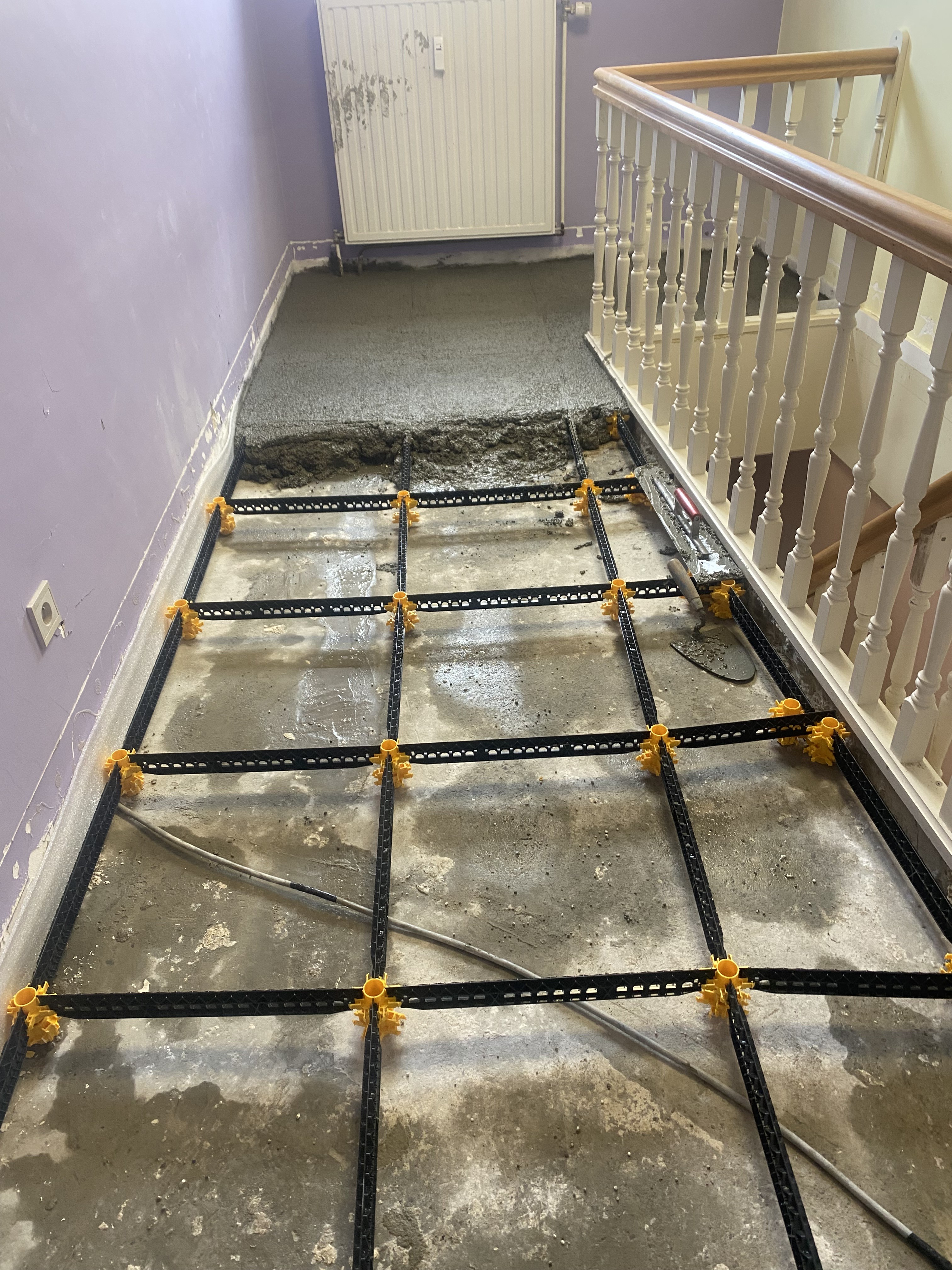
Step 1: Place the Staenis grid
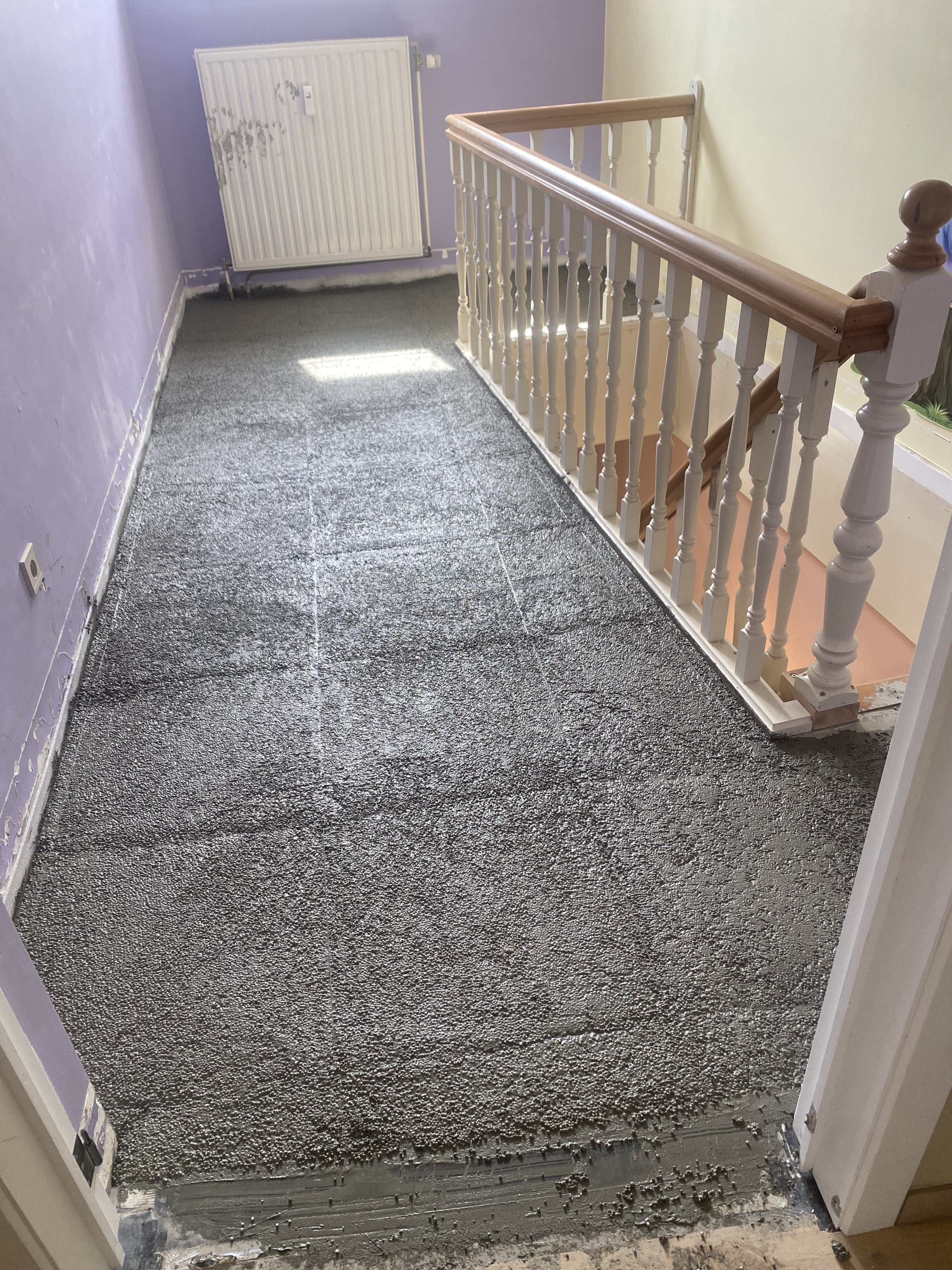
Step 2: Fill with bagged material
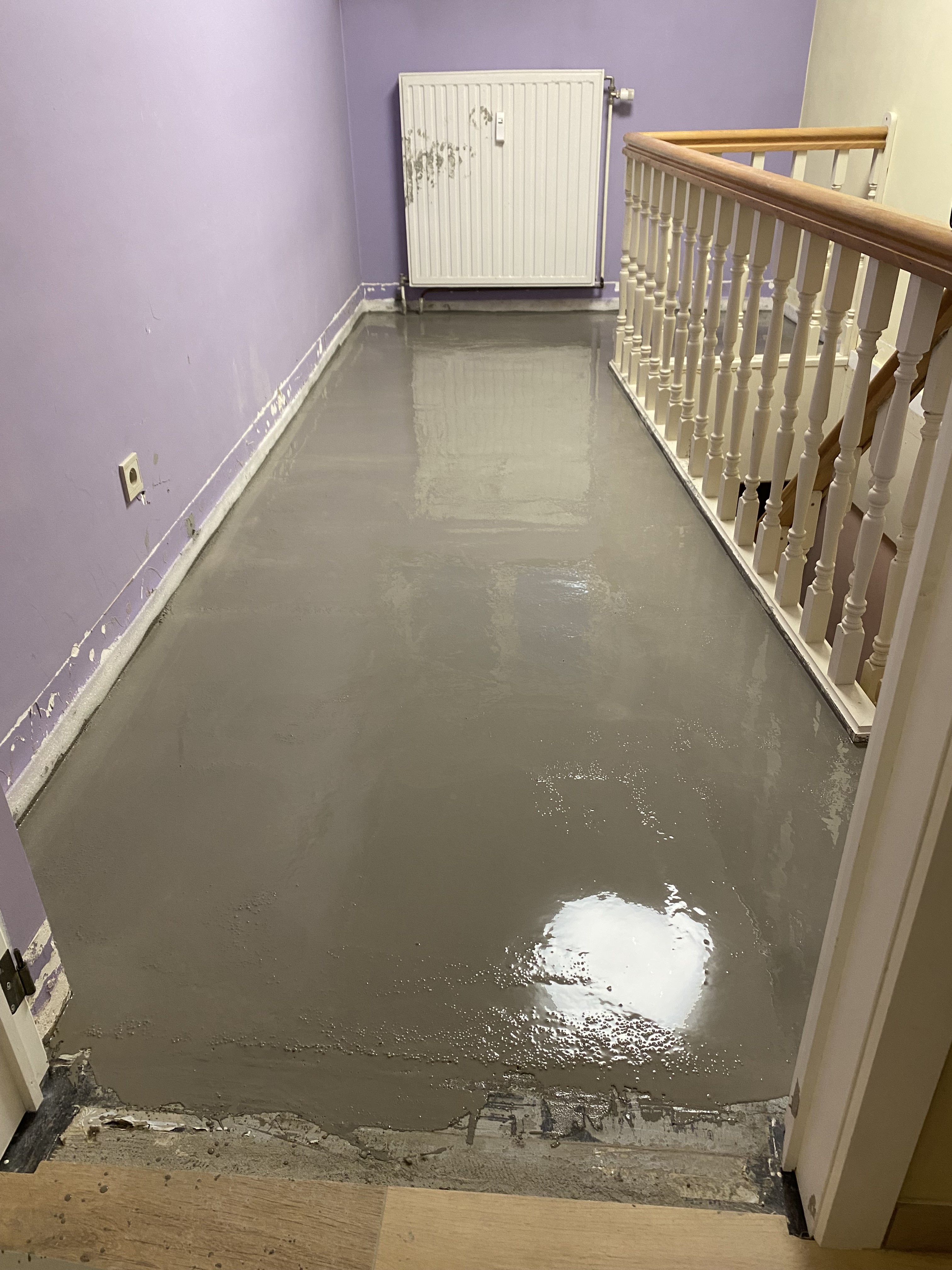
Step 3: Finish the flat top layer
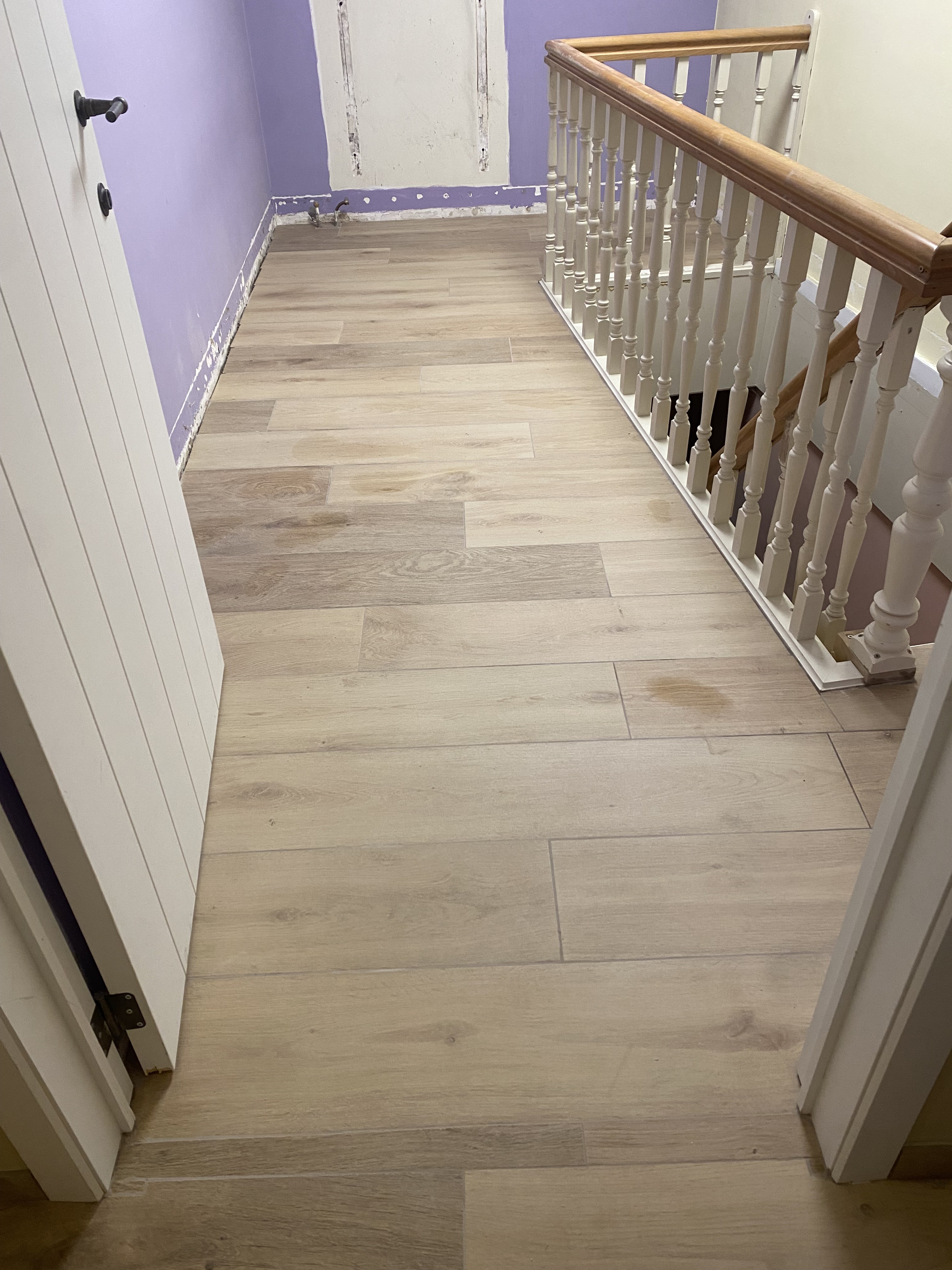
Step 4: Install the final floor
Not sure whether to choose tileable insulation screed (strong) or Latermix Cem Mini?
Both products are lightweight, wet-applied and can both lead to a tiled finish, but the choice depends on what matters most: insulation and low weight, or compressive strength and a more compact build-up. strong performs better on insulation and weight saving, while Latermix Cem Mini clearly performs better on strength.
Tileable insulation screed (strong)
Choose strong if you mainly want the lightest and most insulating build-up possible towards tiles. Inside the Staenis grid, this is often the logical choice when insulation value and weight saving matter most. After about 2 to 4 days, you can tile with a primer and a thin levelling or tile-adhesive layer. Technically, this product is around 0.5 N/mm² in compressive strength with a lambda of about 0.048 W/mK.
Latermix Cem Mini
Choose Latermix Cem Mini if you need a much stronger lightweight mortar for limited heights, detail zones or places where more compressive strength is required. Cem Mini is also directly tileable and is around 5 N/mm² in compressive strength, so about 5 times higher than strong. It is less insulating and heavier though, with a lambda of about 0.142 W/mK.
Do you want maximum insulation and a lightweight build-up towards tiles? Choose strong. Do you want to tile directly onto a much stronger, more compact lightweight mortar or work in limited heights and detail zones? Choose Latermix Cem Mini.
Common mistakes with bagged floor build-up materials
The right choice depends not only on the bag itself, but on the full system above and below it.
- Do not choose a dry filler if you actually need a bonded wet layer or a direct tile solution.
- Never estimate total build-up height from the bag alone. Always include primer, boards, adhesive, tiles and every finish layer.
- Do not compare products only by price per bag. Also compare yield, weight, drying time and the finish required above them.
- Plan properly for pipes, edge strips, moisture, bonding and the load-bearing capacity of the existing substrate.
- Never assume a product is directly tileable by default. Always check the full system build-up and any preparation layer.
Frequently asked questions
Usually they do not mean one specific product, but a bagged solution for their floor build-up. That can range from classic or insulating screed to dry fillers, levelling compounds or a fast-setting lightweight mortar.
Soft is mainly intended as a light insulating fill under a further floor build-up. Strong has higher compressive strength and is meant for situations where, with the right preparation, you want to move faster toward tile finishing.
Choose them when you want to work dry, add little extra weight and finish afterwards with boards such as OSB or Durelis. They are very suitable for renovation, upper floors and dry floor systems.
Yes. Cork granules are often chosen when, in addition to a light fill, thermal comfort and sound reduction matter. They are still a dry fill layer that must be finished correctly.
Use levelling compound only as a fine correction layer on a stable substrate that is already almost flat. It is not a product for filling major height differences or hiding pipes.
Cem Classic is the broader lightweight mortar, Cem Mini is useful at limited build-up heights and for finer applications, and Fast is intended for projects where short drying or waiting times matter.
No. It is an ultra-light dry fill material for thermal filling. You use it inside a wider floor build-up system, not as an independent finish or load-bearing layer.
That depends on load-bearing capacity, required speed, how much moisture you can allow and the desired final finish. Dry methods are often attractive on upper floors and attics; wet systems are useful when you need a bonded or stronger layer.
No. Only products and systems that are explicitly designed for that use are suitable. Even then, primer, levelling and the full system build-up remain decisive.
Not in this guide. For live prices, packaging sizes and availability, we deliberately send you to the relevant Staeniswebshop product page.
Many of these bagged products are suitable for DIY use, provided you follow the correct system build-up, thicknesses and processing method. If in doubt, use the calculator or ask for project advice.
A smart choice starts with the right function
People who search for bagged screed rarely benefit from one standard answer. The best solution depends on weight, insulation, planning, build-up height and the final floor finish. Use this guide as your shortlist, then check the technical sheet and live availability on each product page.
Still unsure? Compare your options with the floor build-up selector, calculate quantities with the calculator or contact us for project advice.