Dry floor system
Insulating fillers floor build-up 1 - Choose a different floor structure
6.3 to 12.5 cm - upper floor, ground floor, basement, etc. - with concrete slab as substrate - multilayer parquet, laminate, cork, carpet, and vinyl
Information
Non-load-bearing fillers such as glass wool, cork granules, or EPS beads are ideal for adding insulation to a floor structure. In this case, the Staenis grid serves as a wooden grid. The floor structure is demountable and can be reused without waste. If additional load-bearing capacity and strength are required, use insulating screed as a wet filler.
Advantages
- Achieve a perfect end result without experience
- Replaces a wooden floor structure
- Directly boardable with double staggered Durelis or OSB wood panels
- Very lightweight floor structure
- Very fast, light, and dry installation
- Simple transport from the front door, through the finished house, to the upper floor or attic space.
- Possibility to insulate your low floor build-up over the entire thickness.
- Spreading floor work over several days (no stress during installation)
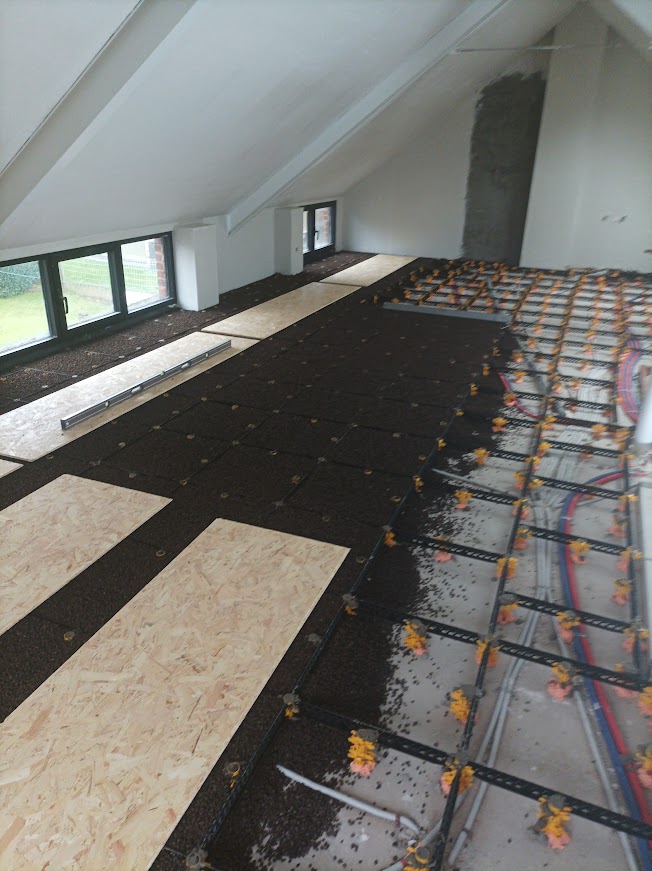
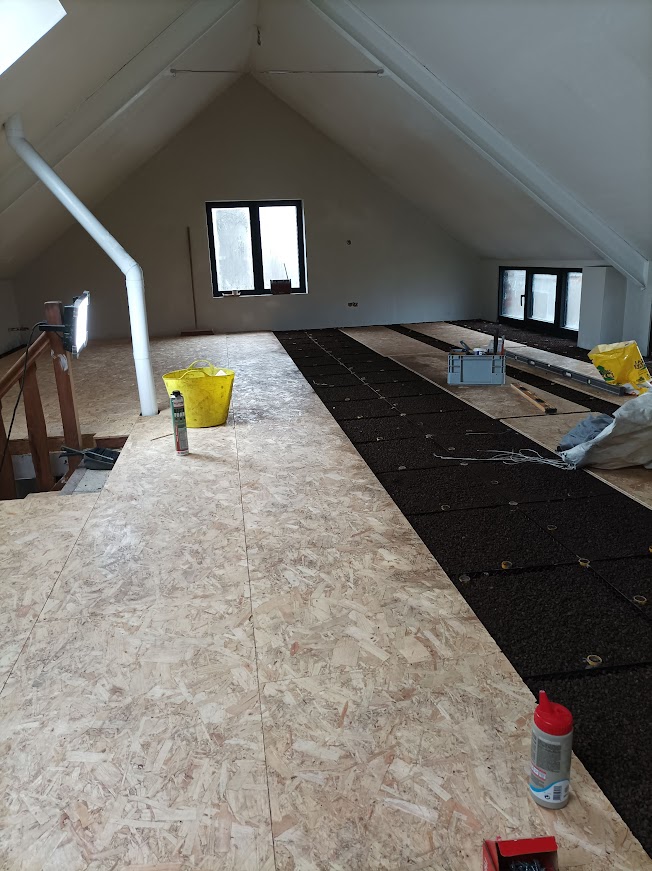

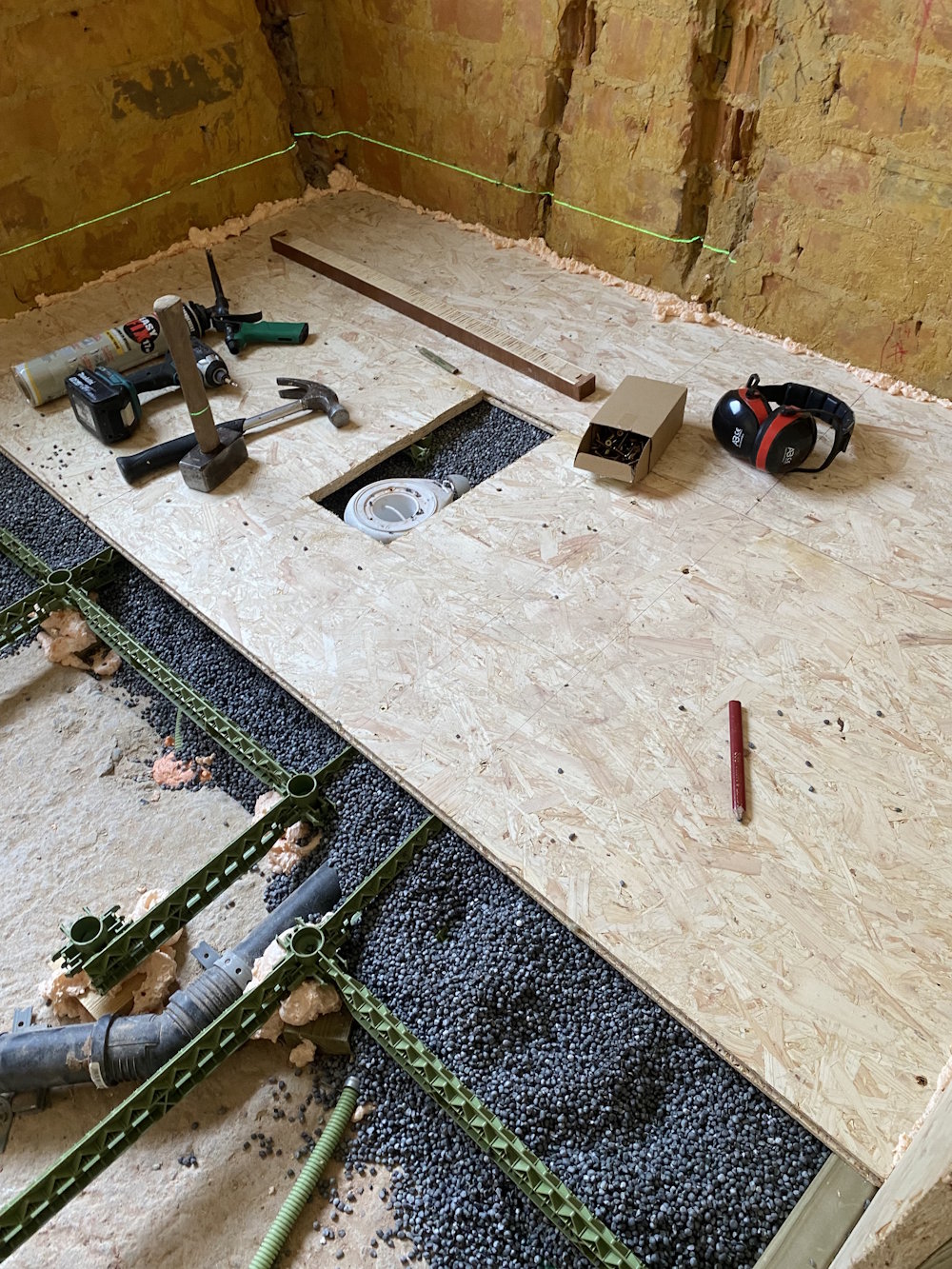

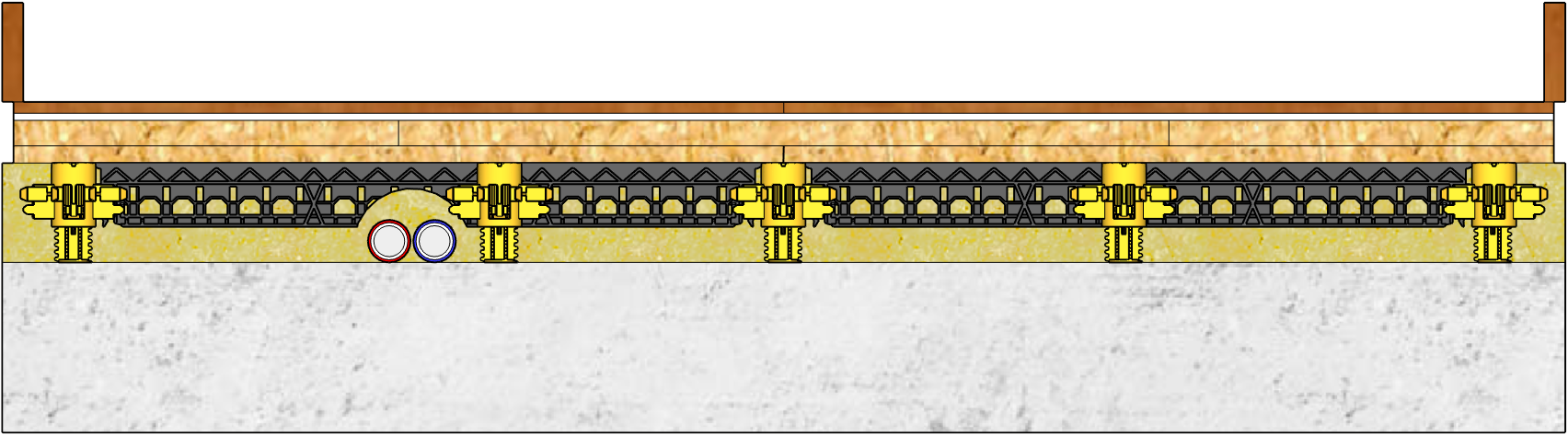
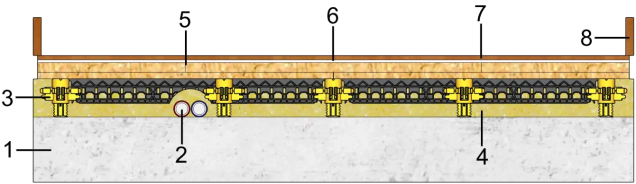
Side view of floor structure
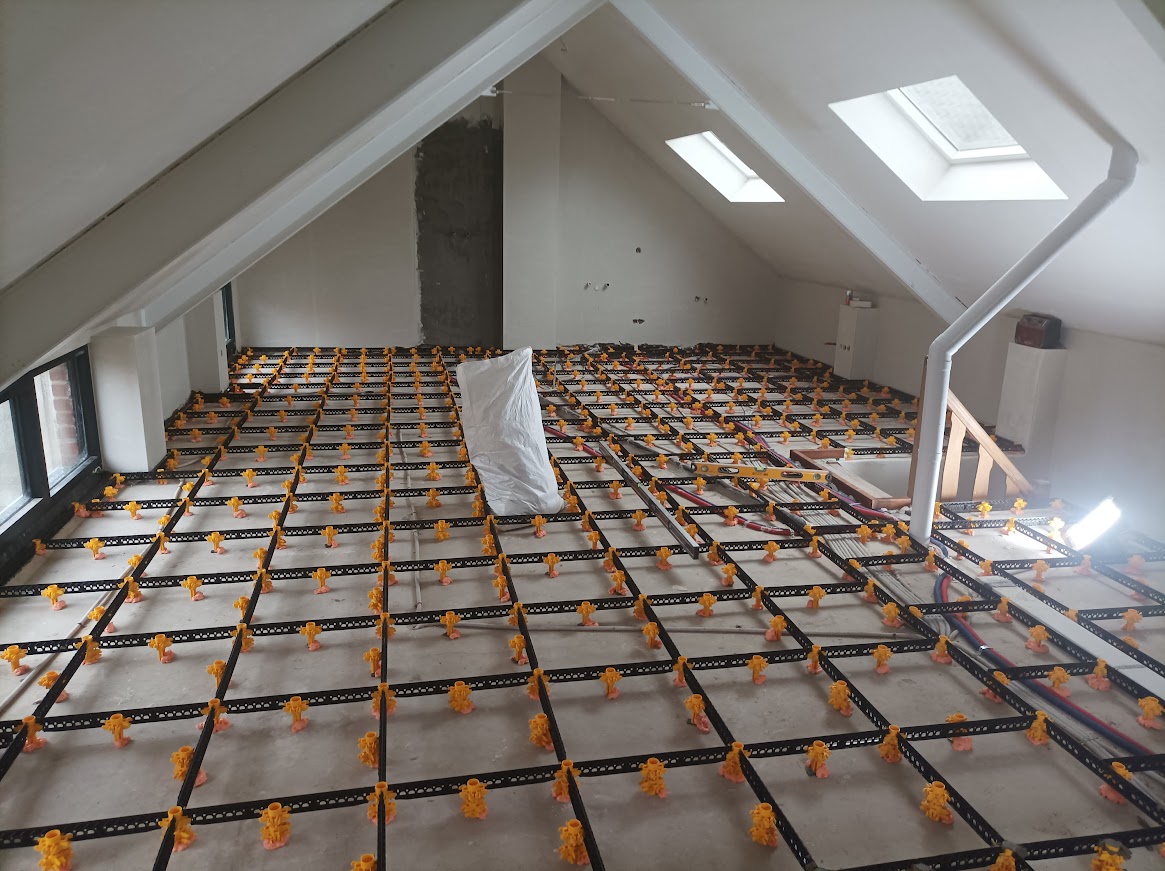
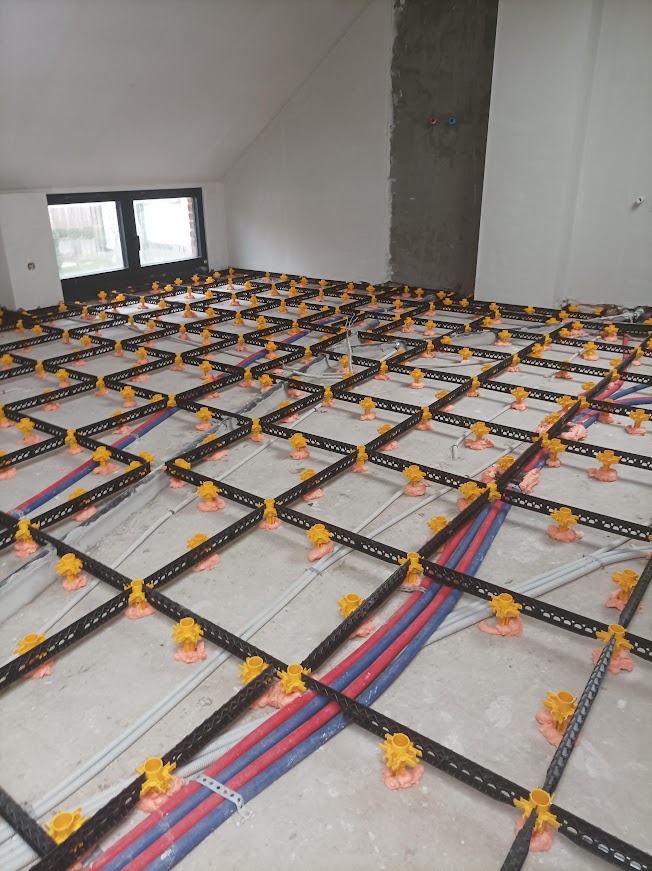
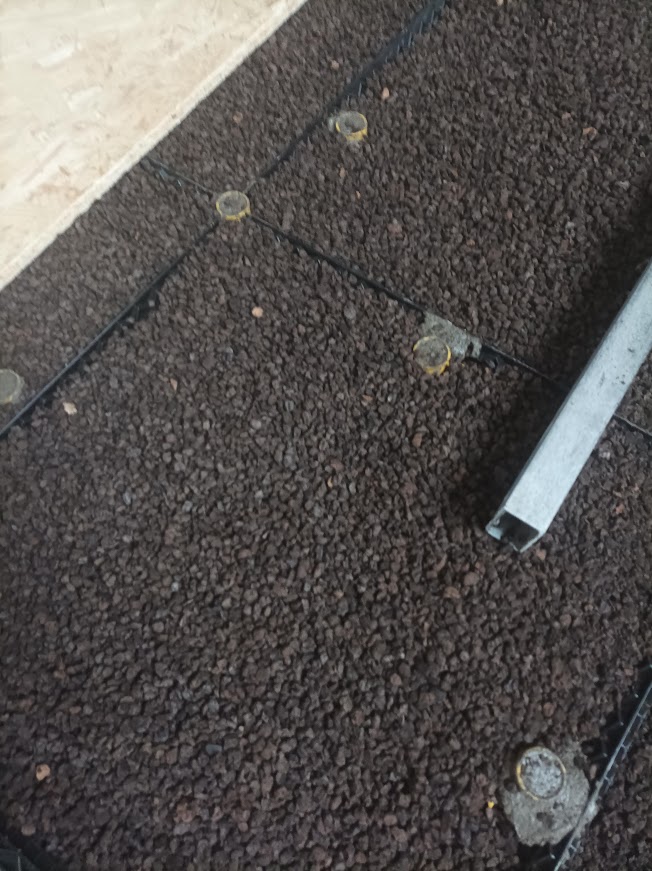
View this floor structure in real life via Sack Zelfbouw
Legend
- Concrete slab
- Pipes (heating, electricity, drainage, etc.)
- Staenis dry floor grid (thickness from 4.5 to 9 cm)
- Glass wool/EPS granules/Cork granules
- Example: OSB or Durelis boarding selected for the floor finish
- Subfloor / felt
- Floating floor covering
- Skirting board
Installation video


We deliver cork insulation granules in bags to your home
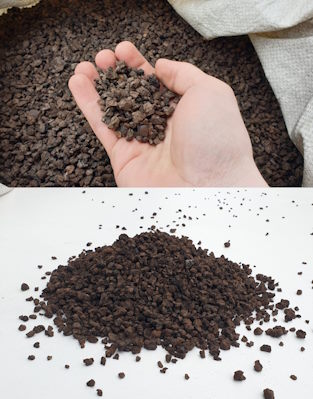
Moisture-resistant recycled cork granules for thermal and acoustic insulation of floors and joist structures.
The cork insulation granules in bags are easy to transport and make it possible to dry-level your floor yourself.
Cork granules are not load-bearing. The fibre-reinforced green dry-floor grid does not require 8 additional feet per m². With the earlier black-and-yellow screed grid, add 8 feet per m² and reinforce them with lime or cement mortar. For both versions, bond the feet to the substrate with PU foam.
We deliver recycled graphite EPS insulation beads in bags to your home
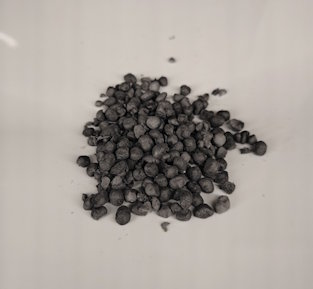
Recycled graphite EPS insulation beads are lightweight, expanded polystyrene beads with excellent thermal insulation and moisture resistance. Perfect as a dry filler for floors, crawl spaces, or other insulation projects.
The EPS beads in bags are easy to transport and process, and form an insulating layer without additional moisture problems.
Fiber-reinforced dry floor grid
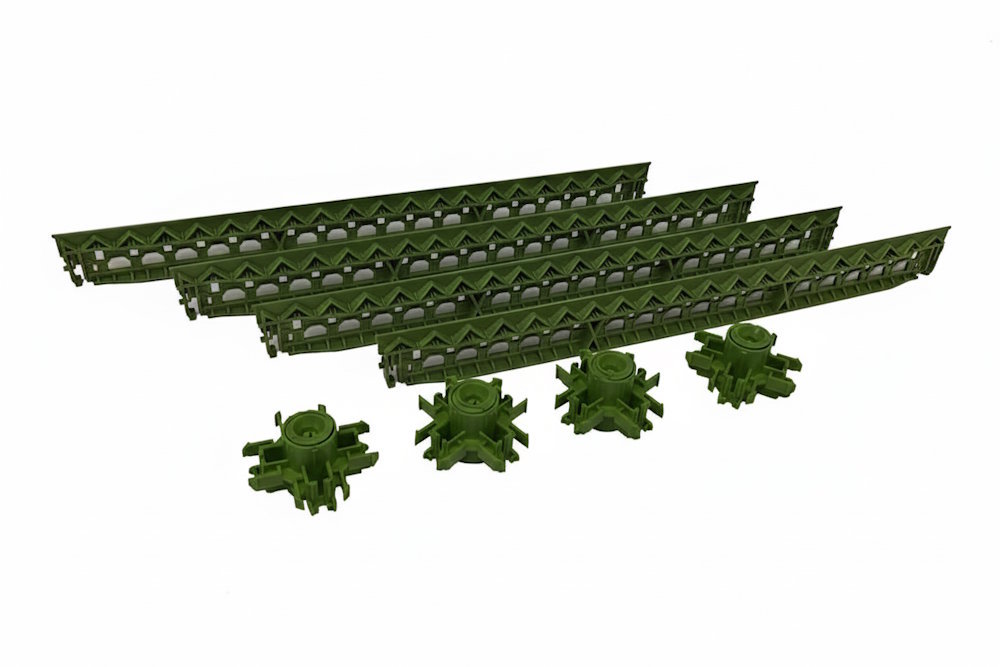
With these green, fibre-reinforced slats, you do not need to install 8 extra levelling feet per m² when using a non-load-bearing filler in the levelling grid. This makes the installation process much smoother.
The 5 levelling legs must be attached to the surface with PU foam.
These fibre-reinforced slats are 2.5 times stronger than the standard black slats.
Enter the screed thickness. Measure from the base on which the screed starts to the top of the screed.
Do not include flooring, adhesive or other layers above.
Enter the combined thickness of the insulating screed and screed. Measure from the base beneath the insulating screed to the top of the screed.
Do not include flooring, adhesive or other layers above.
Enter the thickness of the stabilised sand bed. Measure from the base beneath the sand bed to the top of the sand bed.
Do not include flooring, adhesive or other layers above.
Enter the drainage mortar thickness. Measure from the base beneath the drainage mortar to the top of the drainage mortar.
The screed used to smooth the surface is calculated separately. Do not add extra thickness for it; also exclude adhesive and tiles.
Do not include OSB in this thickness.
Enter the insulating screed thickness. Measure from the base on which the insulating screed starts to the top of the insulating screed.
Do not include OSB or other floor boards on top of the insulating screed. Any screed, adhesive and flooring above are also excluded from this measurement.
Enter the insulating screed thickness. Measure from the base on which the insulating screed starts to the top of the insulating screed.
Do not include the separately calculated levelling compound, adhesive or flooring above.
Do not include OSB in this thickness.
Enter the height of the dry fill in the grid. Measure from the base beneath the grid to the top of the filled grid.
Do not include OSB or other floor boards on top of the system. Underfloor heating, adhesive and flooring above are also excluded from this measurement.
Enter the thickness of the levelling compound layer. Measure from the surface to be levelled to the top of the levelling compound.
Do not include flooring, adhesive or other layers above.
Do not include OSB in this thickness.
Enter the adjusted system height. Measure from the surface supporting the feet or adjustment screws to the top of the supporting structure.
Do not include OSB or other floor boards on top of the system. Underfloor heating, adhesive and flooring above are also excluded from this measurement.
Do not include OSB in this thickness.
Enter the height of the CircoFloor system with fill. Measure from the base on which the adjusting screws stand to the top of the CircoFloor structure.
Do not include OSB or other floor boards on top of the system. Underfloor heating, adhesive and flooring above are also excluded from this measurement.
First select a filling material in the calculator to see its thickness explanation.